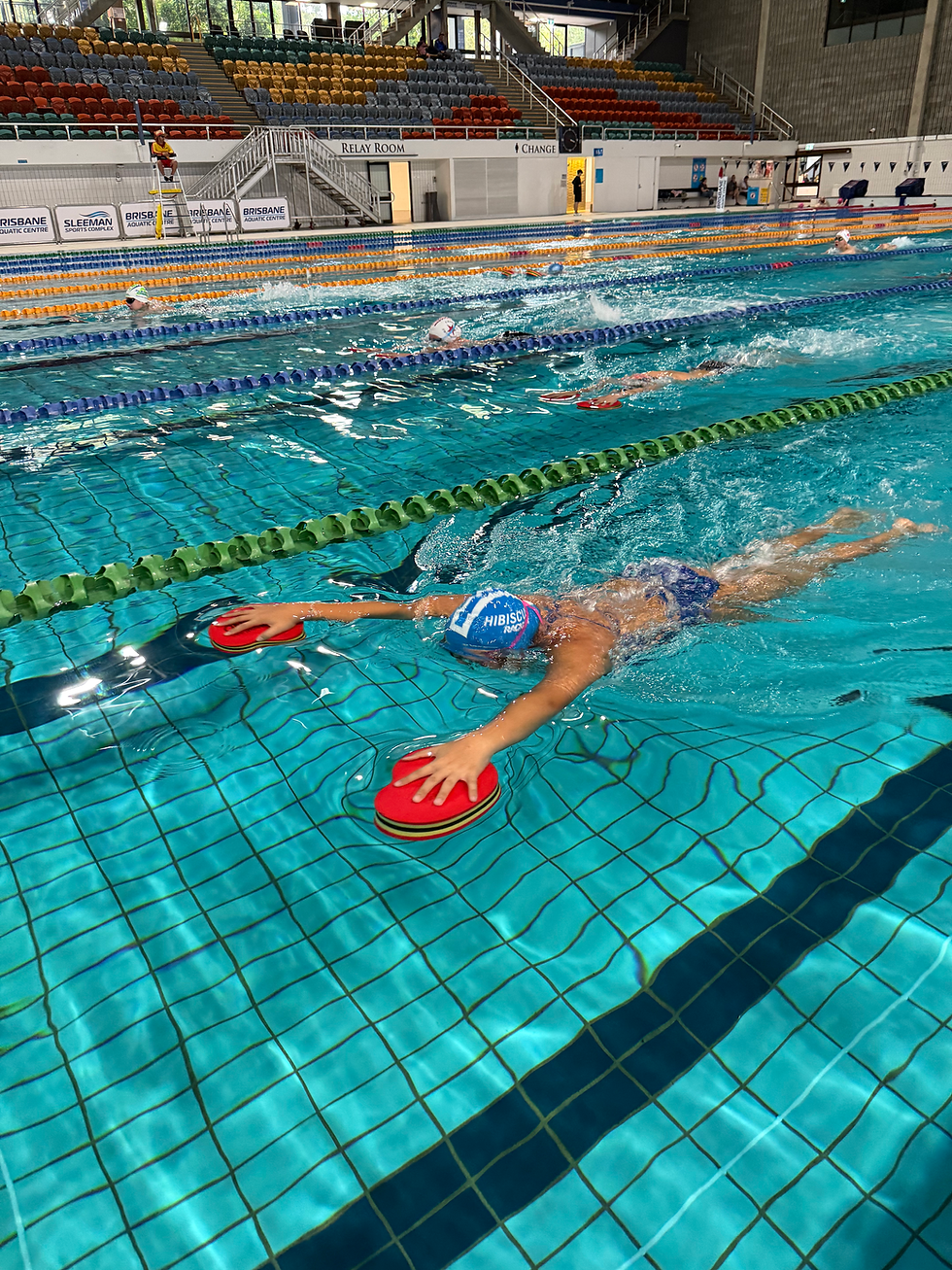
ONCORE as a Diagnostic Tool: When Technique Can’t Hide

Most swimmers (and plenty of coaches) can make a stroke look good for a while. They can hold a shape, hit a tempo, and even “feel” like they’re doing the right thing — all while the body quietly finds workarounds.
That’s the real challenge with swim-specific movement; the water is the ultimate disguise. It lets you compensate just enough to keep moving forward. A shoulder that won’t anchor properly? The body rotates more. A core that won’t connect? The kick gets louder. A weak catch? The hand slips, the elbow drops, and the swimmer simply works harder.
This is where ONCORE becomes more than a training aid.
Used with intention, ONCORE is a diagnostic tool - a way to reveal what’s actually happening underneath the stroke.

Why swimming hides dysfunction so well
Swimming is a full-body skill built on timing, alignment, and pressure. When one link in the chain is missing, the body doesn’t stop - it adapts.
Common “quiet” compensations include:
Overusing the shoulders and arms to replace missing connection through the torso
Twisting or over-rotating to create leverage that should come from the catch
Changing head position to find balance instead of building it through body line
Kicking harder to cover up a lack of hold and propulsion
Shortening the stroke to avoid positions that expose weakness or restriction
These adjustments can be subtle. They often look like “style” - until you remove the swimmer’s ability to cheat.
What makes ONCORE different (and why it reveals the truth)

ONCORE works because it forces engagement.
Not by making swimming easier - but by demanding the swimmer find the right muscles at the right time.
When the hand is supported in a swim-specific position and the swimmer is asked to create meaningful pressure, the body has two options:
Connect properly through the catch, core, and torso
Expose the gap; the weakness, imbalance, restriction, or timing fault that was being masked
Traditional tools can allow compensation (or even encourage it). ONCORE tends to do the opposite; it reduces the swimmer’s ability to “muscle through” with the wrong strategy.
That’s why it can feel like magic.
Not because it gives you a shortcut but because it shows you what you need to fix.
What ONCORE helps you diagnose

Here are some of the most common things ONCORE reveals quickly.
Catch integrity and “hold” of the water
If a swimmer can’t create pressure early, ONCORE makes it obvious:
the hand slips
the elbow collapses
the pull becomes a press-down
the stroke shortens to avoid the weak position
Diagnostic question: Can they maintain pressure without speeding up or tightening through the shoulders?
Core connection (the missing link)
A strong catch without a connected torso is just arm work.
With ONCORE, swimmers often discover they can’t transfer force from hand to body line. You’ll see:
hips dropping as the hand tries to anchor
excessive rotation to “find power”
a kick that suddenly becomes frantic
Diagnostic question: Does the swimmer stay long and stable when pressure increases?
Left/right asymmetry
Many swimmers have a “good side” that hides a weaker one.
ONCORE makes asymmetry loud:
one hand finds pressure; the other slips
one side stays stable; the other wobbles
one arm path is clean; the other crosses or swings wide
Diagnostic question: Can they replicate the same feel and control on both sides?
Scapular control and shoulder load
When swimmers can’t stabilise the shoulder blade, they often compensate by gripping through the neck and upper traps.
ONCORE tends to highlight this immediately:
tension rises
breathing becomes harder
the stroke loses rhythm
Diagnostic question: Can they create pressure while keeping the shoulder “quiet” and supported?
Timing faults that look like “technique preference”
Some timing issues don’t look dramatic, they just reduce efficiency.
ONCORE can expose:
a catch that starts too late
a pull that disconnects from rotation
a breath that disrupts alignment or disconnects the core
Diagnostic question: Does the stroke stay organised when you ask for more pressure, not more speed?
How to use ONCORE like a diagnostic; a simple framework

You don’t need a complicated test set. You need a clear intention and a consistent lens.
Try this:
Start with a baseline (easy swim, normal stroke)
Add an ONCORE drill
Watch what changes - especially what the swimmer can’t maintain
Ask for feel-based feedback (not “what did it look like?” but “what did you feel?”)
Choose one priority to improve, then retest
The goal isn’t to “swim with ONCORE.”
The goal is to use ONCORE to reveal the truth, then build the swimmer back into full stroke with better connection.
The real magic: once you see it, you can fix it
When a dysfunction stays hidden, swimmers train around it for years. They get stronger, fitter, tougher, but not necessarily better.
When ONCORE exposes the missing link, you finally get a clear target:
the exact position that breaks down
the exact moment connection is lost
the exact side that can’t replicate the skill
And once you can see it, you can coach it.
That’s why ONCORE is such a powerful “magician” in this space.
Not because it distracts from the problem, but because it stops the swimmer from hiding it.
Want help diagnosing what you’re seeing?
If you’re a coach or swimmer and you’re noticing a breakdown you can’t quite explain, bring it to a clinic or workshop. We’ll help you identify what’s being compensated for, and how to rebuild the movement so it holds under pressure, in the water, at speed, and when it counts.
Explore ONCORE clinics and education resources at https://www.getoncore.com.au