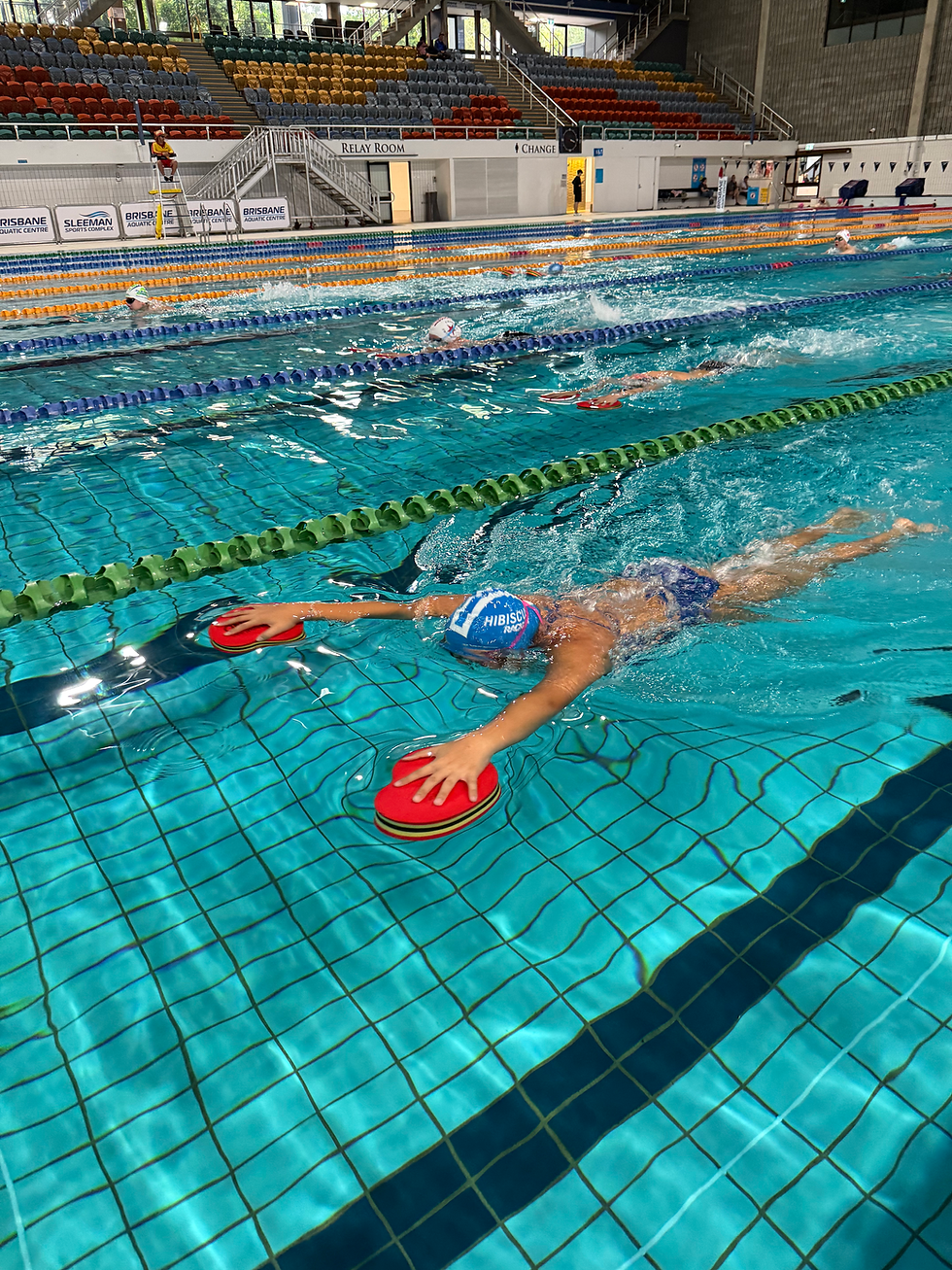
The Bridge Between Drills and Full Stroke: Making Practice Count

Swimming is a technical sport where mastery comes through deliberate practice. But not all practice is created equal. The key question many coaches and swimmers ask is: "How do isolated drills actually transfer to improved full-stroke performance?"
The Science of Skill Transfer
When we break down complex movements into smaller components through drills, we're creating learning opportunities that can dramatically improve our full stroke, but only if certain critical elements are present.

Essential Components for Effective Transfer
1. Proprioceptive Awareness
Drills must enhance your body's ability to sense its position in water. This "feel" is what allows technical improvements to become automatic in your full stroke. Tools like ONCORE excel here by providing constant tactile feedback that develops this awareness beyond what verbal coaching alone can achieve.
2. Core Engagement Consistency
For drill work to transfer effectively, the same core muscle patterns must be activated in both the drill and the full stroke. When your core engagement remains consistent, the neural pathways being developed during drills will seamlessly integrate into your complete swimming motion.
3. Progressive Complexity
Effective drill sequences follow a natural progression; from activation to transition to consolidation. This structured approach, as seen in ONCORE's stroke guides, ensures that isolated skills build upon each other before being integrated into the full movement.
4. Real-Time Feedback
Perhaps the most crucial element of successful transfer is immediate feedback. When a drill highlights imbalances or technical flaws through direct sensory feedback, swimmers can make adjustments that carry forward into their full stroke. This experiential learning accelerates development far more effectively than repetition without awareness.

The 4 F's Approach to Skill Transfer
The most effective drill-to-stroke transfer follows what we call the "4 F's" approach:
1. Feel: Experience the correct movement pattern through sensory feedback
2. Fail: Recognise when technique breaks down
3. Figure: Problem-solve and make adjustments
4. Fix: Apply corrections and reinforce proper technique
This cycle creates a learning environment where isolated skills don't remain isolated, they become integrated components of improved technique.
Quality Over Quantity
Remember that mindlessly repeating drills without attention to technique won't lead to positive transfer. As one of my coaches put it, "practicing with poor form only transfers bad habits back into your stroke." Instead, focus on quality repetitions with precise technique, ensuring that every drill movement reinforces the patterns you want to see in your full stroke.
The Challenge of Postural Alignment
Maintaining proper postural alignment in water is far more challenging than on land due to:
1. Unstable Environment: Water provides few stable reference points for balance, making it harder to feel how your body is aligned.
2. Increased Resistance: Water is 800 times denser than air. If your body isn't perfectly aligned, this resistance multiplies, creating drag that slows you down.
3. Core Engagement Requirements: Without the constant support of gravity, swimmers must actively engage core and stabilising muscles to maintain a streamlined position.
4. Limited Sensory Feedback: In water, sensory feedback is less immediate. The body may not register misalignment until it results in a loss of efficiency.
Effective Drill Integration Strategies
To maximise the transfer from isolated drills to full stroke:
Focus on technique first. Before increasing volume, ensure you've mastered the technique using video analysis, coach feedback, or tools like ONCORE.
Take it slow. Practice at a controlled pace that allows you to focus on technique without feeling rushed.
Break it down. Isolate parts of your stroke with purpose-driven drills. For example, practice the catch separately before integrating it back into your full stroke.
Use tools wisely. Tools like ONCORE can emphasise core engagement, body alignment, and feel for the water, helping develop technical proficiency while strengthening key muscle groups.
Build progressively. Follow a structured progression from simple to complex movements, ensuring each stage is mastered before advancing.
Final Thoughts
The bridge between isolated drills and improved full-stroke swimming isn't built through volume alone; it's constructed through purposeful practice with the right tools and awareness. When drills provide immediate feedback, engage the correct muscle patterns, and follow a progressive sequence, the transfer to full-stroke swimming becomes not just possible, but inevitable.
For swimmers and coaches looking to maximise this transfer effect, remember that every drill should have a clear purpose that connects directly to full-stroke performance. By maintaining this connection and emphasising quality over quantity, your practice will consistently translate to improved performance when it matters most.